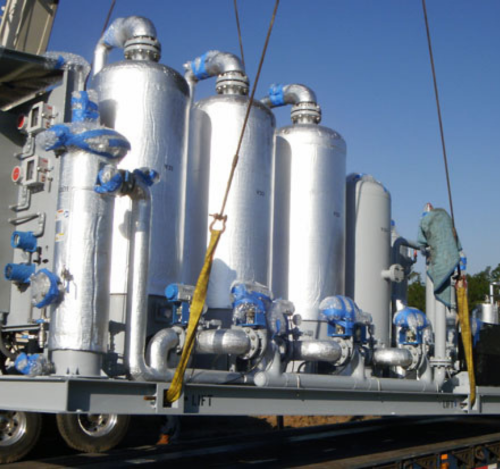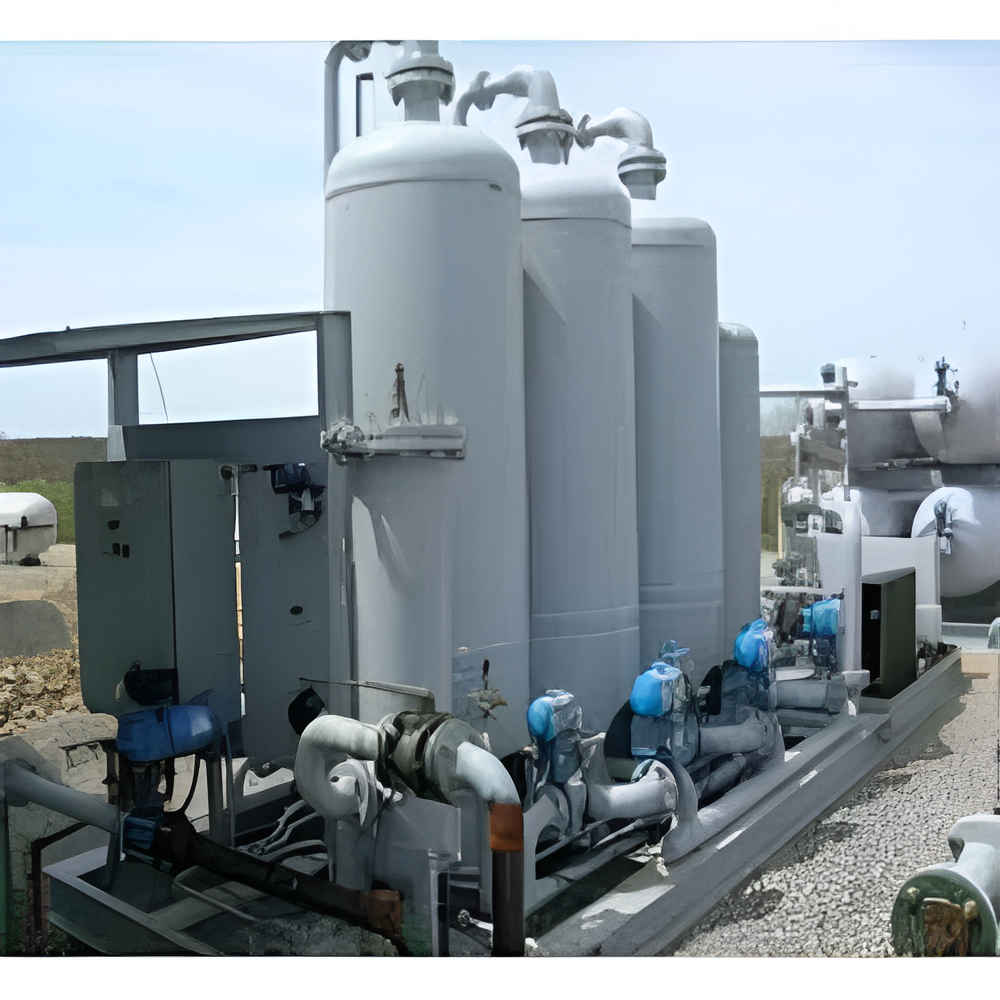
Methane (CH4), Carbon dioxide (CO2), Nitrogen (N2), Oxygen (O2), Hydrogen Sulfide (H2S), and Water make up the majority of the biogas produced by digesters, landfills, etc., Due to the presence of the aforementioned contaminants, the raw biogas has a poor calorific value. To match the composition and attributes of LPG and CNG, it is crucial to improve the biogas before using it as a CBG transportation fuel, grid injection, or industrial heating source. JOG WTE removes these contaminants using 4 tower-based biogas purification system with high-quality molecular sieves and activated carbons. Using best-in-class equipment, JOG WTE’s sophisticated biogas purification system upgrades raw biogas to bio-methane, increasing fuel efficiency above >98%.
The raw biogas fed to the JOG biogas purification system to remove H2S first due to corrosive gas in nature which can damage internal parts of equipment’s. H2S removal equipment is the first step in upgrading biogas. The elimination of H2S from the biogas is the first and most important stage in the biogas purification process. The average H2S level of biogas is 500 to 10000ppm However; it could change depending on the raw material utilized to produce the biogas. JOG WTE uses a catalyst and activated carbon to reduce the H2S concentration to under <5 ppm.
To keep track of the entrance biogas composition and outlet gas purity, JOG WTE uses an online gas analyzer. The main elements being examined are CH4, CO2, O2, H2S and dew point in a gas analyzer, JOG WTE uses the NDIR and electrochemical methods.
Moisture must be eliminated from biogas once the hydrogen sulfide has been taken out. The biogas initially has a moisture level of 2 to 4%. By bringing the biogas’ temperature below 7°C, JOG WTE eliminates the moisture from it. When removing CO2, H2O must first be removed from the JOG VPSA system.
As biomethane is an odorless gas, JOG WTE adds an odorant for safety reasons. There are various odorants available for odorizing biomethane. Ethyl Mercaptan is used by JOG as an odorant.
VPSA technology is used by JOG WTE to remove carbon dioxide (CO2). In order to improve the methane content of biogas and achieve natural gas quality, CO2 is adsorbed by molecular sieves. The absorber tower will become saturated after a number of cycles and require renewal. By lowering the pressure below the atmospheric pressure, JOG WTE achieves regeneration. CO2 will be expelled to the atmosphere and desorbed from the molecular sieve at this pressure. To enhance the methane, JOG WTE adds one or two pressure equalization phases. The JOG WTE VPSA technology delivers the highest level of 98% methane purity. JOG wte guaranteed Methane slippage <2 % during CO2 Removal process by providing methane recovery system.
The compression of upgraded biomethane (CH4) is applied by CNG booster compressor for filling CNG Cylinders at a pressure of 250 bar, JOG WTE fills the CNG cascade or tube trailer with enhanced biomethane. Following filling, CNG cascades or tube trailers are delivered to OMC in SATAT scheme, businesses, hotels, and colleges for use as fuel for transportation, power production, and thermal applications. Compared to conventional fuels, biogas-powered vehicles can lower CO2 emissions by 75% to 200%.
Additionally, the improved biomethane may be pumped into the regional or national grid network. This could be a regional low-pressure gas distribution network or a high-pressure gas transmission grid.
A variety of companies employ enhanced biogas with more than 96% methane for a variety of industrial uses. A few of them are as follows.