
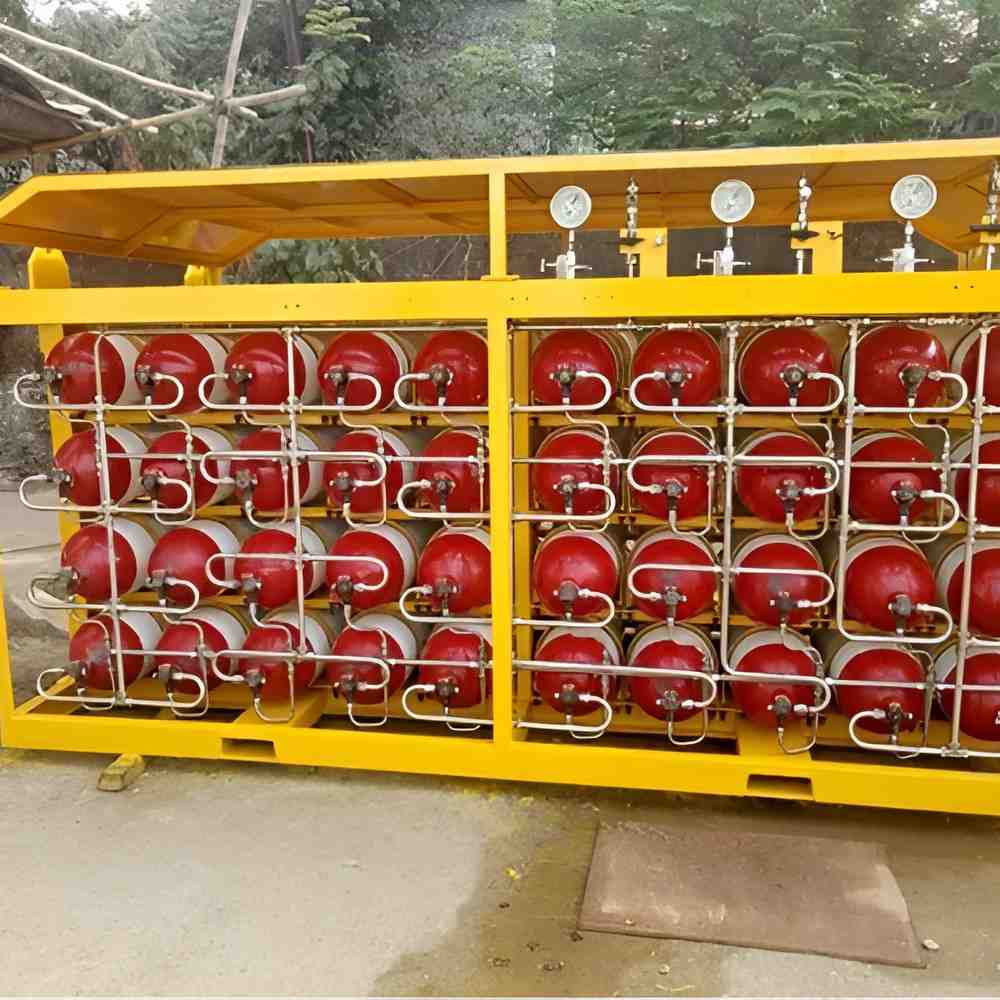
Additionally, we at Jog Waste To Energy Pvt. carry out the engineering, design, manufacturing, assembly, supply, inspection, and testing of CNG and Bio-CNG cascades at the works in compliance with customer specifications. CNG cylinders are usually composed of a specific steel alloy and have a seamless construction as per PESO approval.
Biogas that has been improved to a quality comparable to fossil natural gas and has a methane concentration of >90% is referred to as bio-CNG or bio-compressed natural gas. It is also known as sustainable natural gas or biomethane.
Compressed biogas that has been refined to contain more than 90% methane can be delivered in gas cylinders, or cascades, for final usage after being compressed to 250 bar.
The Cascades are designed to accommodate clients’ needs for storage of their entire CNG generation. Filling and storing bio-CNG entails putting gas into a series of cylinder cascades and keeping them under the right pressure and conditions. The gas is then supplied to an OMC retail location to be sold under the “SATAT” program.
A series of high-pressure cylindrical vessels called cascades will be used to fill and transfer the compressed biogas. 3000-liter metal cascades or cascades with a larger capacity must be utilized for the transportation of CBG. CBG can be transported via composite cascades or steel cylinder cascades. Incorporating IS 7285 into steel cylinder cascades is essential.
Compressed Bio Gas (CBG) produced from the CBG plant will be retailed through the CBG dispensing unit set up by the Oil Marketing Companies CBG supplied under the SATAT scheme shall meet IS 16087:2016 specifications of BIS as follows:
The manufactured storage capacity of the cascade, manufactured by Jog Waste to Energy Pvt. Ltd., varies from 900 to 4500 liters. In addition, every cascade has between 12 and 60 cylinders.