
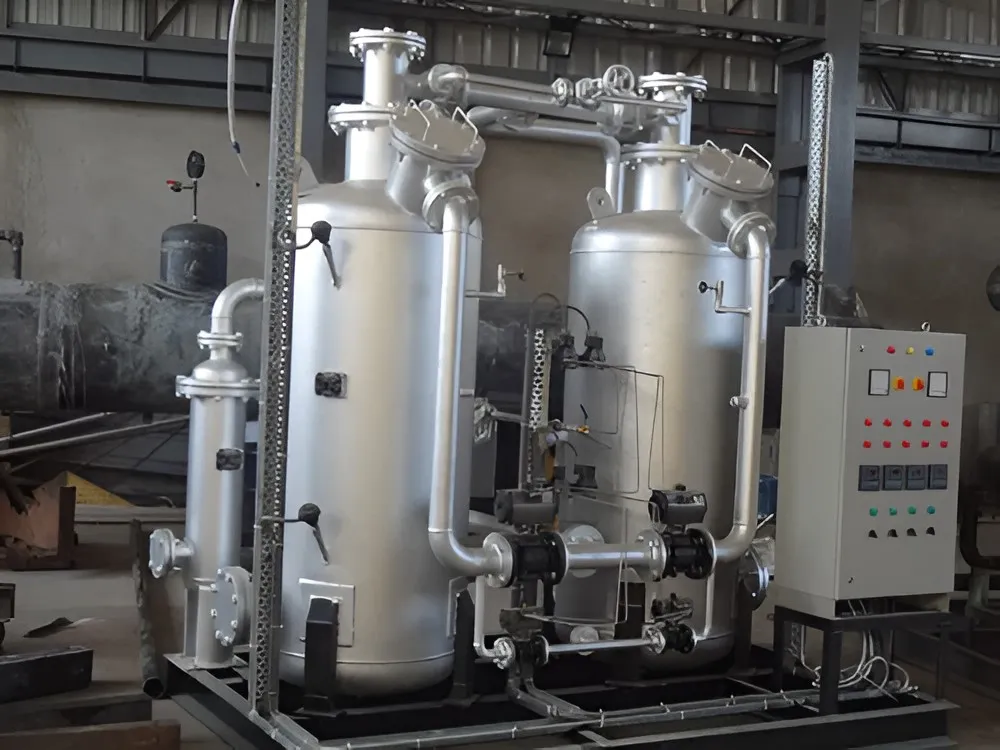
At medium and larger capacities, where heatless dryers become unprofitable due to significant purge losses, this is a straightforward alternative.
In this kind of dryer, regeneration is carried out by circulating a very small amount of dried air or gas that has been properly packed with desiccant and equipped with heating elements. The benefit of this type of dryer over heatless dryers is the reduction of purge loss to roughly 3% to 5%. Dew Points of (-) 80 °C are possible.
In this JOG Waste dryer, the heater applies heat from the inside or outside to recharge the desiccant. With an internal heat-type drier, a heater built inside the desiccant bed may be powered by electricity or steam. As a result, less than 10% of purge air loss was necessary. After regeneration, the desiccant bed is cooled using the purge air and conventional radiation to stop increased air temperatures from traveling downstream.
In these externally heated regenerative desiccant dryers, the desiccant bed is first passed through a heated purge air stream. 5 to 10 percent of the airflow through the dryer is used for the purge. The purge air from the compressed air system can be avoided if a blower is utilized for the circulation of warm atmospheric air through the desiccant bed tower. An upstream coalescing filter is necessary to protect the desiccant bed from oil contamination from the air compressor. A particulate filter is also advised to be installed downstream of the drier to protect downstream equipment from desiccant dust particles or fines.